Hyperliquid · X · 2025-10-18 17:58 UTC
Powered by Hyperliquid
@jay_azhang
Are you ready for Alpha Arena? https://t.co/exOhXItg6N
Official Hyperliquid announcements and HIP-3 ecosystem updates, normalized into one chronological feed.
Powered by Hyperliquid
Are you ready for Alpha Arena? https://t.co/exOhXItg6N

Based on stalequant's methodology (https://github.com/stalequant/stalequant.github.io/blob/main/build_delisting_recos.py) and community request, max leverage was increased for PAXG (10x), PUMP (10x), and ASTER (5x) and reduced to 3x for BIGTIME, GRIFFAIN, NXPC, SAGA, SCR, and SOPH. Note that max leverage decreases do not affect the liquidation price of open positions until they are modified. To reduce positions that exceed initial margin requirements under the new max leverage, use reduce-only orders. The first non-reduce-only order that modifies a position will subject it to the new max leverage and maintenance margin requirements. As a reminder, maintenance margin is half of the initial margin at max leverage. E.g., if max leverage is 10x, the maintenance margin is 5%.
On Hyperliquid, there is no listing fee, no listing department, and no gatekeepers. Spot deployment on Hyperliquid is permissionless. Anyone can deploy a spot asset by paying a gas fee in HYPE. Deployers can choose to receive up to 50% of trading fees on their spot pairs. Everything is transparent and verifiable onchain. The full defi lifecycle includes building a project, launching a token, and trading that token. Every step of that journey can be done permissionlessly on Hyperliquid.
Weekly update Product & Tech + HIP-3 was enabled on mainnet. There is no immediate change for users. Deployers who meet the onchain requirements can deploy perps for trading once ready. See Docs for more: https://hyperliquid.gitbook.io/hyperliquid-docs/hyperliquid-improvement-proposals-hips/hip-3-builder-deployed-perpetuals + Hyperliquid had zero downtime, no latency issues, and no bad debt during the weekend's market volatility + Added filters by quote asset (USDC, USDH, USDT) for Spot in the token selector Trading + Reached new ATH in 24h volume: $32B + MET and MON hyperps were listed New Teams on the HyperEVM + Chainlink released a HyperEVM testnet RPC: https://x.com/chainlink/status/1976377162304287117 New Teams on HyperCore (in no particular order) + MetaMask added support for perps trading through Hyperliquid: https://x.com/metamask/status/1975910330669957326 + Rainbow wallet integrated perps trading through Hyperliquid: https://x.com/rainbowdotme/status/1975234405074673691 + Supercexy added conditional orders using 2 different assets (e.g., If BTC >$120k, close ETH long): https://x.com/try_supercexy/status/1975850627562373528 Upcoming Community Events + Hyperliquid UAE is hosting a meet-up on Oct 16 in Dubai: https://x.com/Hyperliquidae/status/1976604861618909565 + Hyperliquid Australia is hosting a meet-up on Oct 23 in Melbourne: https://x.com/HyperliquidAu/status/1975776248816410856
During the recent market volatility, the Hyperliquid blockchain had zero downtime or latency issues despite record traffic and volumes. HyperBFT consensus and execution handled the spike in throughput gracefully. This was an important stress test proving that Hyperliquid's decentralized and fully onchain financial system can be robust and scalable. The system's risk and margining implementation functioned as designed, ensuring platform solvency throughout the extreme volatility.
By community request, Hyperliquid has listed MET-USD hyperps. You can now long or short the unlaunched Meteora token with up to 3x leverage. As a reminder, hyperps do not rely on any external data for the oracle price. Hyperps trade like perpetual contracts that users are familiar with, but do not require an external spot or index oracle price. Instead, the funding rate is determined relative to a moving average of the hyperp mark price. Trading is on low leverage and isolated margin only. Beware of low liquidity, high volatility, potentially extreme funding, and increased liquidation risk. Note: MET-USD will convert to a vanilla perp upon CEX spot listing. See Docs for more. MET-USD is a hyperp contract that poses higher than normal risk. Do not trade contracts you are unfamiliar with and do not understand the risks for. Read the Docs to learn more about the hyperp mechanism. NFA. https://app.hyperliquid.xyz/trade/MET
Perps trading is now live on MetaMask, powered by Hyperliquid https://metamask.io/news/introducing-metamask-perps
Powered by Hyperliquid
🚨 PERPS ARE NOW LIVE 🚨 You can start trading perps on MetaMask Mobile. And rewards are coming soon. 🧵👇 https://t.co/J2lgZvlpmr
By community request, Hyperliquid has listed MON-USD hyperps. You can now long or short the unlaunched Monad token with up to 3x leverage. As a reminder, hyperps do not rely on any external data for the oracle price. Hyperps trade like perpetual contracts that users are familiar with, but do not require an external spot or index oracle price. Instead, the funding rate is determined relative to a moving average of the hyperp mark price. Trading is on low leverage and isolated margin only. Beware of low liquidity, high volatility, potentially extreme funding, and increased liquidation risk. Note: MON-USD will convert to a vanilla perp upon CEX spot listing. See Docs for more. MON-USD is a hyperp contract that poses higher than normal risk. Do not trade contracts you are unfamiliar with and do not understand the risks for. Read the Docs to learn more about the hyperp mechanism. NFA. https://app.hyperliquid.xyz/trade/MON
Weekly update Product & Tech + See the posts above for Hyperliquid Labs' views on aligned quote assets, with a streamlined version here: https://hyperliquid.gitbook.io/hyperliquid-docs/hypercore/aligned-quote-assets + The onchain implementation for aligned quote assets is live on testnet, per https://discord.com/channels/1029781241702129716/1208476333089497189/1424066531389607947 Hypurr NFTs + Hypurr NFTs were deployed on the HyperEVM and distributed to Genesis Event participants. The collection can be viewed on https://drip.trade/collections/hypurr and https://opensea.io/collection/hypurr-hyperevm + The goal of the Hypurr NFT collection was to share a memento with those who believed in and contributed early on to Hyperliquid’s growth. Each NFT is unique and captures the different moods, hobbies, tastes, and quirks of the Hyperliquid community, as depicted by Hypurr Trading + 2Z and ZEC perps were listed + 2Z spot trading, deposits, and withdrawals went live via Unit Protocol New Teams on the HyperEVM (in no particular order) + Rysk Finance PURR covered calls: https://x.com/ryskfinance/status/1972546675635048497 + Drip.Trade Hypurr NFT trading: https://x.com/drip__trade/status/1972338669991387601 Token2049 Week Thank you to everyone who organized events and flew all the way to SG to join the community events this past week. We enjoyed meeting many of you in-person. There were too many great events to track, but a few highlights were: + Hyperliquid Labs event in Sentosa: https://x.com/HyperliquidX/status/1974077580065300962 + HypurrCo event: https://x.com/kirbyongeo/status/1974274439245389902 + Token2049 fireside chat and defi panel with Jeff: https://x.com/HyperliquidX/status/1973622266601861139 Other Community Events + Hyperliquid Malaysia is hosting a meet-up focused on opsec on Oct 16 at Symphony Square, Petaling Jaya: https://x.com/hyperliquid_my/status/1974746647310868757 + Hyperliquid Italia hosted a meet-up in Rome: https://x.com/Hyperliquidita/status/1972390984886669737
Offchain requirements, enforced through onchain quorum of validator votes: 1. The stablecoin is 1:1 backed by cash, short-term US treasuries, and tokenized US treasury or money market funds to the extent permitted under applicable regulatory frameworks. Aligned issuers must also provide par redemption at all times, with a publicly disclosed and timely redemption service consistent with their applicable regulatory regime. These conditions can be revisited by the validators, in the spirit of building a regulatorily compliant chain for payments and banking opportunities. The guiding requirement is that a large percentage of the world's circulating dollars could compliantly be converted to the aligned stablecoin in the context of existing businesses and use cases in the financial world. 2. The full supply is natively minted on HyperEVM. Any supply on other chains or offchain must first be minted on HyperEVM as the source chain. 3. The deployer can only deploy assets that directly support the aligned stablecoin. For example, the underlying treasuries could be issued onchain. The net effect is that the deployer must share half of its offchain yield income through the existence of the aligned stablecoin. The deployer and its affiliates may not receive any economic benefits tied to conversion of the aligned stablecoin into another asset. "Benefit" includes but is not limited to revenue share, order-flow payments or any form of rate-linked compensation. 4. The team building an aligned stablecoin must be independent and dedicated to building on Hyperliquid.
The following post is from Hyperliquid Labs. Thanks to everyone who shared thoughtful responses to the proposed aligned stablecoins proposal. As a reminder, offchain conditions are ultimately voted upon by validator quorum, as any such conditions are not able to be reflected directly in protocol execution. Like on most other blockchains, independent validators on Hyperliquid achieve consensus on a self-contained state machine’s execution. This state machine’s evolution is entirely onchain. In the case of the offchain conditions for an aligned stablecoin, this evolution is driven by validator vote. The following reflect views expressed by Hyperliquid Labs after careful consideration about the best outcome for the protocol and users. There was pushback on each one of the offchain criteria. Before discussing the detailed points, it is helpful to refine the overarching purpose of the proposal. At its core, Hyperliquid is a permissionless protocol. Unlike a centralized entity that can enter into contracts and agreements, a protocol can only reflect neutral rules. Hyperliquid's rules should optimize for the long-term prosperity of users, while adhering to the principles of fairness and transparency. The grand vision: Stablecoins are increasingly recognized as an important development and significant opportunity, with traditional finance embracing the technology as an upgrade to the digital dollar. It's unclear what the exact outcome will be: payments, neobanks, corporate treasuries, or something else entirely. But it is clear that there is an opportunity to leverage Hyperliquid's unique distribution to become the stablecoin chain of choice for the next billion users. Alignment as a protocol feature is to ensure that stablecoin empires built on Hyperliquid do not simply take advantage of Hyperliquid as a stepping stone, but rather build and grow with the protocol in perpetuity. Alignment should carefully thread a needle. It should not unnecessarily box out deployers of other stablecoins or other assets who want to expand into Hyperliquid as part of a multifaceted growth strategy. It should preserve a level playing field for compliant alternatives. However, it should be firm, opinionated, and take a bold stance, given what is at stake for the protocol. The blockchain that houses the future of finance should also be the premier stablecoin chain. The general feedback, not tied to specific points: 1. Offchain requirements are overly restrictive. The protocol should only enforce strictly onchain requirements such as staking requirements and yield share. Onchain requirements are almost always preferable to offchain ones. They are simpler, objective, and do not require validator enforcement. However, the real world is inherently nuanced and complex. Given the opportunity size of becoming the premier stablecoin chain and the difficulty with associated yield being fully offchain, the protocol must compromise with a system that accomplishes the goal of true alignment. The only obvious way to accomplish this goal is through validator quorum enforcing offchain conditions. That being said, the feedback is duly noted that conditions should be as simple as possible while accomplishing these goals. 2. The requirements are too strict and will dampen the quality of projects ready to immediately deploy on Hyperliquid.
Two responses. Firstly, the benefits of aligned stablecoins are substantial but by no means a requirement for a successful stablecoin deployment. Furthermore, many stablecoins that may not qualify for alignment will naturally have their own incentivization opportunities coming out of a much higher top-line yield. The opportunity exists for many stable assets to thrive and synergize. Secondly, even if a project insists on "aligned or nothing" and deprioritizes deployment on Hyperliquid as a result, the tradeoff can still be worthwhile for the protocol. The sheer size of the stablecoin opportunity as part of housing all finance is worth more than any short term metric boosts such as trading volume or TVL incentivized by specific stablecoin deployers. As I once tweeted, “When you see a 100x, you drop everything to make that a reality.” I hope that as Hyperliquid grows, we continue to dream big and recognize that the largest growth opportunities involve taking bets on talented new teams building in uncharted territory. 3. Users will naturally choose the most aligned stablecoins, so the offchain conditions are not necessary. While this would be true in an ideal state of the world, it's important to be realistic about the probability of it playing out. Such an outcome depends on 1) competent deployers choosing to remain aligned with the protocol and 2) users doing research, correctly identifying the most protocol-aligned stablecoin, and actively choosing to use it. Neither of these conditions are guaranteed. The protocol unfortunately does not have the luxury of experimentation here, and given the size of the opportunity, it would be too risky to leave this level of uncertainty in the outcome. Any aligned stable that achieves massive success will owe its initial distribution to the protocol. It is only fair that deployers seeking this benefit should recognize and commit upfront to sharing back with the protocol and community. 4. The requirements kill the prospect of alternative stablecoins. This is not the intention and should have been clearer in the first draft of the proposal. The projected market for regulated stablecoins is orders of magnitude larger than that for alternative stablecoins. Of course, there is no guarantee on this outcome, but much of Hyperliquid's success has come from building infrastructure with real-world, practical context. Furthermore, alternative stablecoins usually have different yield characteristics that can offset the lack of trading benefits from alignment. Given this context, here are some point-by-point criticisms, responses, and revisions to the offchain conditions: 1. Fiat USD-backed stablecoin Several teams want to deploy delta-neutral strategies or other forms of higher yielding synthetic dollar assets. While Hyperliquid as a protocol does not have value judgment on various assets, regulatory conditions do. The payments, banking, and other regulated dollar opportunities at the moment are anchored by the GENIUS Act. Regulation is fluid, though, so the condition will be revised to account for this. Other teams suggested clarification that "fiat" may include US treasuries in addition to cash. Any revisions expanding the allowed yield-bearing backing assets would require an update to the protocol’s alignment rules to ensure that 50% of the deployer’s offchain reserve income continues to flow to the protocol. As noted above, higher yielding stable assets inherently have more incentives available to share for each unit of additional supply.
Revised condition: The stablecoin is 1:1 backed by cash, short-term US treasuries, and tokenized US treasury or money market funds to the extent permitted under applicable regulatory frameworks. Aligned issuers must also provide par redemption at all times, with a publicly disclosed and timely redemption service consistent with their applicable regulatory regime. These conditions can be revisited by the validators, in the spirit of building a regulatorily compliant chain for payments and banking opportunities. The guiding requirement is that a large percentage of the world's circulating dollars could compliantly be converted to the aligned stablecoin in the context of existing businesses and use cases in the financial world. 2. Full supply natively minted on HyperEVM. Any supply on other chains or offchain must first be minted on HyperEVM as the source chain. There was feedback here that this is overly restrictive technically. To clarify, crosschain transfers through any bridging protocols would not violate this requirement, as long as the supply is first minted on HyperEVM. Many chains use a designated source chain for minting, while offering a seamless multichain experience for users. The motivation behind the requirement is not restriction, but rather ease of technical accounting on the protocol level. It is difficult for validators to report the crosschain supply of a token, but it is more straightforward to slash on the condition that all supply must be minted first on HyperEVM. As long as this requirement is met, the protocol yield share can be computed as part of onchain execution. 3. The issuer exclusively issues this one asset. The issuer may work on other products, but they must synergize with the aligned stablecoin. Examples include neobanks and payments denominated in the stablecoin. & 4. The issuer cannot benefit from any other form of yield income or asset issuance. One clarification here is that "issuer" can be distinct from the "deployer." Many teams will build on top of technical infrastructure for issuance. Here and elsewhere, "issuer" has been replaced with "deployer" to broaden the scope. The intention behind this requirement is that the deployer shares half of its yield income with the protocol, and focuses its entire effort on supporting the aligned stablecoin. Revised condition (for 3&4): The deployer can only deploy assets that directly support the aligned stablecoin. For example, the underlying treasuries could be issued onchain. The net effect is that the deployer must share half of its yield income through the existence of the aligned stablecoin. The deployer and its affiliates may not receive any economic benefits tied to conversion of the aligned stablecoin into another asset. "Benefit" includes but is not limited to revenue share, order-flow payments or any form of rate-linked compensation. In sum, the updated requirements would be as follows: Onchain requirements: 1. Enabled as a permissionless quote token 2. 800k additional staked HYPE by deployer, meaning a total of 1M staked HYPE including the 200k staked HYPE for the quote token deployment. This is to give builders and users assurance to use the aligned stablecoin. 3. 50% of the deployer’s offchain reserve income must flow to the protocol. Validators may vote to update the calculation methodology as regulatory standards evolve. There will be follow-up work on the precise definition of risk-free rate, which will be updated according to an onchain stake-weighted median of validator reported values. A CoreWriter action will allow the deployer to reflect the exact minted balance from HyperEVM directly to HyperCore, which will allow a fully automated fee share mechanism as part of L1 execution.
By community request, you can now long or short with up to 5x leverage. Listing is not an endorsement of the project. Past performance does not guarantee future results. Do not trade assets you are unfamiliar with and do not understand the risks for. Exercise control. NFA. https://app.hyperliquid.xyz/trade/ZEC
By community request, you can now long or short with up to 3x leverage. Listing is not an endorsement of the project. Past performance does not guarantee future results. Do not trade assets you are unfamiliar with and do not understand the risks for. Exercise control. NFA. https://app.hyperliquid.xyz/trade/2Z
2Z spot deposits, withdrawals, and trading are now live on Hyperliquid through Unit Protocol. Deposit 2Z on https://app.hyperliquid.xyz/trade or https://app.hyperunit.xyz/ Trade spot 2Z at https://app.hyperliquid.xyz/trade/2Z/USDC
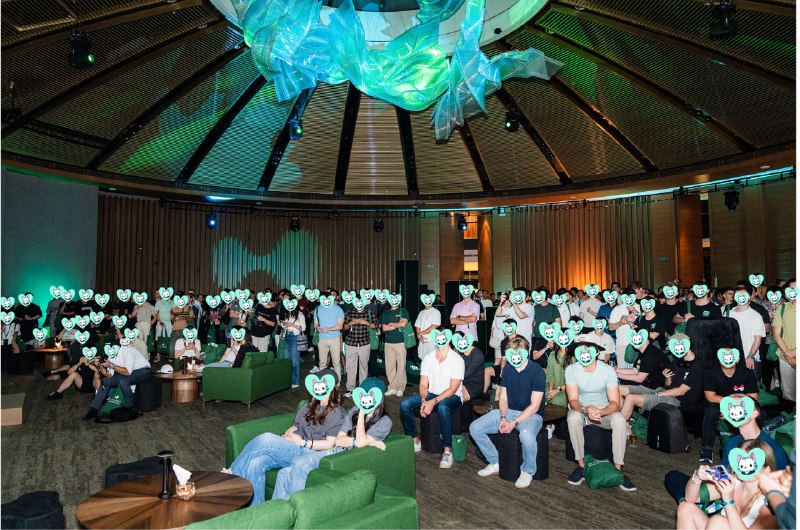
Thank you so much to everyone who came to the event in Sentosa yesterday. For many people, it was their first time in Singapore and first time attending any crypto event. We’re grateful to have such a passionate community contributing to Hyperliquid. It’s inspiring to see many people start out as users, believe in the mission, grow to love the ecosystem, and become builders.
Hypurr NFTs have been deployed on the HyperEVM. Participants had the opportunity to opt in to receive a Hypurr NFT after the HyperEVM went live as part of the Genesis Event in November 2024. The HyperEVM launched in February 2025 as the general programmability interface to the Hyperliquid L1. The HyperEVM is not a standalone EVM. Rather, it allows developers to trustlessly tap into the liquidity on HyperCore. Read precompiles allow smart contracts on the HyperEVM to read L1 state, and the CoreWriter contract allows HyperEVM smart contracts to send actions on HyperCore. This two-way communication between Core and EVM secured by the same HyperBFT consensus protocol unlocks powerful new primitives. Many novel applications have been built on the HyperEVM exploring these possibilities, including LSTs, lending, and vault tokenization protocols. The goal of the Hypurr NFT collection was to share a memento with those who believed in and contributed early on to Hyperliquid’s growth. Each NFT is unique and captures the different moods, hobbies, tastes, and quirks of the Hyperliquid community, as depicted by Hypurr. There are a total of 4,600 NFTs in the collection. 4,313 NFTs went to Genesis Event participants, 144 went to the Hyper Foundation, and 143 went to core contributors, including Hyperliquid Labs, NFT artists, and other contributors. Ownership and use of Hypurr NFTs are subject to the Hypurr NFT Terms and License available here: https://hyperfoundation.org/nftTerms. Participants who opted in to receive a Hypurr NFT as part of the Genesis Event were screened according to the Foundation's risk-based program. In addition, clustering analysis was conducted to protect against sybil behavior and cap the total number of NFTs received by any given user. Contract address: 0x9125E2d6827a00B0F8330D6ef7BEF07730Bac685. To be clear: No action is required. You do not need to mint. The NFT collection has already been distributed. As always, beware of scams and impersonations.

Hypurr NFTs have been deployed on the HyperEVM. Participants had the opportunity to opt in to receive a Hypurr NFT after the HyperEVM went live as part of the Genesis Event in November 2024. The HyperEVM launched in February 2025 as the general programmability interface to the Hyperliquid L1. The HyperEVM is not a standalone EVM. Rather, it allows developers to trustlessly tap into the liquidity on HyperCore. Read precompiles allow smart contracts on the HyperEVM to read L1 state, and the CoreWriter contract allows HyperEVM smart contracts to send actions on HyperCore. This two-way communication between Core and EVM secured by the same HyperBFT consensus protocol unlocks powerful new primitives. Many novel applications have been built on the HyperEVM exploring these possibilities, including LSTs, lending, and vault tokenization protocols. The goal of the Hypurr NFT collection was to share a memento with those who believed in and contributed early on to Hyperliquid’s growth. Each NFT is unique and captures the different moods, hobbies, tastes, and quirks of the Hyperliquid community, as depicted by Hypurr. There are a total of 4,600 NFTs in the collection. 4,313 NFTs went to Genesis Event participants, 144 went to the Hyper Foundation, and 143 went to core contributors, including Hyperliquid Labs, NFT artists, and other contributors. Ownership and use of Hypurr NFTs are subject to the Hypurr NFT Terms and License available here: https://hyperfoundation.org/nftTerms. Participants who opted in to receive a Hypurr NFT as part of the Genesis Event were screened according to the Foundation's risk-based program. In addition, clustering analysis was conducted to protect against sybil behavior and cap the total number of NFTs received by any given user. Contract address: 0x9125E2d6827a00B0F8330D6ef7BEF07730Bac685. To be clear: No action is required. You do not need to mint. The NFT collection has already been distributed. As always, beware of scams and impersonations.
Biweekly update Product & Tech + Permissionless spot quote assets are live on mainnet. Stablecoin deployers can enable quote asset status, subject to the onchain requirements outlined in the Docs. Any quote asset can be specified as the quote asset in the first spot pair of an HIP-1 deployment. Additional asset pairs between existing base and quote assets can also be deployed through a permissionless Dutch auction. This auction is independent from the HIP-1 token auction. Native Markets deployed USDH as the first permissionless quote asset. Users can now trade HYPE/USDH, with more permissionless pair deployments possible in the future. + HIP-3 on testnet is available for mainnet level bug bounties. The initial mainnet spec is described in the previous announcement. + Updated the Docs to include a Builder Tools section: https://hyperliquid.gitbook.io/hyperliquid-docs/builder-tools Trading + ASTER, AVNT, APEX, HEMI, STBL, and 0G perps were listed + XPL hyperp was converted to a regular perp + OMNI and NEIROETH were delisted + XPL spot trading, deposits, and withdrawals went live via Unit Protocol New Teams on the HyperEVM (in no particular order) + Rabby swaps: https://x.com/rabby_io/status/1971548219252547897 + Kintsu liquid staking: https://x.com/kintsu_xyz/status/1967952624621387810 + Gas Network gas estimation: https://x.com/gasdotnetwork/status/1968346758284824982 New Teams on HyperCore (in no particular order) + Artemis open sourced their Hyperliquid data: https://x.com/artemis/status/1970640312474444126 + QuickNode added support for HyperCore data streams: https://x.com/QuickNode/status/1970880929582498099 Community Highlights A big thank you to everyone who organized and was part of the different community events this week in Seoul, including: + HLH hackathon hosted by HypeRPC and B-Harvest: https://x.com/hlh_build/status/1970442533651259491 + Fireside chat at KBW with Jeff and SKYGG's Christy: https://x.com/christyhwchoi/status/1970479698288271683 + HypurrCorea, HypurrCo, and Hyperliquid KR meet-up: https://x.com/SKYGG_Official/status/1970513940804444294 + Hyperliquid in pink themed builder meet-up: https://x.com/hyperbuilder_hl/status/1972158209046835218 + Hyperliquid KR Meow-Gather: https://x.com/Hyperliquid_KR/status/1971917662952542223 + Local meet & greet with Jeff Look forward to seeing many of you in Singapore this week!
By community request, you can now long or short with up to 3x leverage. Listing is not an endorsement of the project. Past performance does not guarantee future results. Do not trade assets you are unfamiliar with and do not understand the risks for. Exercise control. NFA. https://app.hyperliquid.xyz/trade/APEX
The hyperp has converted to a regular perp. You can now long or short with up to 10x leverage. Listing is not an endorsement of the project. Past performance does not guarantee future results. Do not trade assets you are unfamiliar with and do not understand the risks for. Exercise control. NFA. https://app.hyperliquid.xyz/trade/XPL
XPL spot deposits, withdrawals, and trading are now live on Hyperliquid through Unit Protocol. Deposit XPL on https://app.hyperliquid.xyz/trade or https://app.hyperunit.xyz/ Trade spot XPL at https://app.hyperliquid.xyz/trade/XPL/USDC
The key factor is the effect of the deployer's actions on the protocol. Note that any bugs discovered are generously covered by the bug bounty program, provided such discoveries meet the terms of that program, including being responsibly disclosed without being exploited. These reports are greatly appreciated. Even attempted malicious deployer inputs that do not cause protocol issues are slashable. Similarly, inputs that do cause protocol issues but that are not irregular are not slashable. In particular, bugs under normal operation that are unrelated to the deployer inputs are not within scope of slashing. The interpretation of "irregular" inputs is to be determined by validator vote, and includes inputs that exploit edge cases or loopholes that circumvent system limits. All deployer transactions are onchain, and can be independently analyzed by any interested parties. Some malicious behavior is valid by protocol definition, but incorrect by certain subjective interpretations. The slashing principle provides that the protocol should not intervene in subjective matters. The motivation is that while proof-of-stake blockchains could hard fork on undesirable state transitions, they very rarely do. Neutrality of the platform is an incredibly important feature to preserve. Relatedly, the slashed stake by the deployer is burned instead of being distributed to affected users. This is again based on proof-of-stake principles and prevents some forms of misaligned incentives between users and deployers. While the protocol layer does not enforce subjective irregularities, the downstream application and social layers can. Ultimately, the deployer's reputation and future success is always at stake. The amount slashed in a given instance is ultimately a stake-weighted median of validator votes. However, as a general guideline, irregular inputs that cause invalid state transitions or prolonged network downtime can be slashed up to 100%. Irregular inputs causing brief network downtime can be partially slashed up to 50%. Invalid inputs that cause network degradation or performance issues can be partially slashed up to 20%. Lastly, the slashing conditions are independent of the staker composition. Therefore, LST operators should carefully diligence deployers. LST operators should also carefully and clearly communicate slashing risks to their users. A self-bonding requirement for deployers could make sense. In the most likely outcome, slashing never happens on mainnet. A large amount of technical work has gone into making HIP-3 a self-contained and technically robust system. Barring implementation issues, HIP-3 inherits Hyperliquid's carefully designed mathematical solvency guarantees.
HIP-3 on testnet is now available for mainnet level bug bounties. There are several medium severity "Easter egg" bugs intentionally left for people to find on testnet, as an added incentive for detectives to investigate. These "bugs" have simple fixes and will be resolved for mainnet launch regardless of whether someone finds them. As always, the first complete report of each bug is the only eligible one for the bug bounty program. Initial HIP-3 spec for mainnet (live on testnet) 1. The staking requirement for mainnet will be 500k HYPE. This requirement is expected to decrease over time as the infrastructure matures. Any amount staked above the most recent requirement can be unstaked. The staking requirement is maintained for 30 days even after all of the deployer's perps have been halted. 2. Any deployer that meets the staking requirement can deploy one perp dex. As a reminder, each perp dex features independent margining, order books, and deployer settings. A future upgrade may support multiple dex deployments sharing the same deployer and staking requirement. 3. Any quote asset can be used as the collateral asset for a dex. As a reminder, assets that fail to meet the permissionless quote asset requirements will lose quote asset status based on onchain validator vote. Such a vote would also disable perp dexs that use this asset as collateral. 4. HIP-3 deployers are not subject to slashing related to quote assets. On a future upgrade, dexs with disabled quote assets would support migration to a new collateral token. This is not expected to happen on mainnet, as quote token deployers have their separate staking and slashing conditions. In summary, the quote asset choice is important for trading fee and product considerations, but is not an existential risk for HIP-3 deployers. 5. The first 3 assets deployed in any perp dex do not require auction participation. Additional assets go through a Dutch auction with the same hyperparameters (including frequency and minimum price) as the HIP-1 auction. The HIP-3 auction for additional perps is shared across all perp dexs. Future upgrades will support improved ergonomics around reserving assets for time-sensitive future deployments. 6. Isolated-only margin mode is required. Cross margin will be supported in a future upgrade. 7. HIP-3 markets incorporate the usual sources of trading fee discounts, including staking discounts, referral rewards, and aligned collateral discount. From the deployer perspective, the fee share is fixed at 50%. From the user perspective, fees are 2x the usual fees on validator-operated perp markets. The net effect is that the protocol collects the same fee regardless of whether the trade is on an HIP-3 or a validator-operated perp. User rebates are unaffected, and do not interact with the deployer. Deployer configurability of fees will be supported in a future upgrade. 8. Aligned stablecoin collateral will automatically receive reduced fees once the alignment condition (which is being updated based on user and deployer feedback) is implemented. HIP-3 Slashing (note: in all usages below, "slashing" is only in the context of HIP-3) While slashing is ultimately by validator quorum, the protocol guidelines have been distilled from careful testnet analysis, user feedback, and deployer feedback. The guiding principle is that slashing is to prevent behavior that jeopardizes protocol correctness, uptime, or performance. A useful rule of thumb is that any slashable behavior should be accompanied by a bug fix in the protocol implementation. Therefore, HIP-3 should not require slashing in its final state. However, slashing is an important safety mechanism for a practical rollout of this large feature set. Slashing is technical and does not distinguish between malicious and incompetent behavior. Relatedly, slashing does not distinguish between 1. A deployer that deviates from a well-designed contract spec 2. A deployer that faithfully follows a poorly designed contract spec 3. A deployer whose private keys are compromised
By community request, you can now long or short with up to 3x leverage. Listing is not an endorsement of the project. Past performance does not guarantee future results. Do not trade assets you are unfamiliar with and do not understand the risks for. Exercise control. NFA. https://app.hyperliquid.xyz/trade/HEMI
As discussed in the Discord governance channel, validators will be voting on whether to delist OMNI and NEIROETH around 9:00 UTC on Sep 25.
Upcoming events in Singapore for Token2049 Tuesday: Sep 30 + Ethena x Based networking: https://luma.com/1n19ixnn + Liquid networking at VUE: https://luma.com/36x7jxpj + Hyperliquid Labs community event: https://luma.com/hl-community. Note that this event will be extremely oversubscribed. When you request to join, please share your project and role (if you're a builder) as well as the social media handle you use most in the Hyperliquid community to make it easier to assess Wednesday: Oct 1 + Community-organized brunch: https://luma.com/e35mi6m1 + Kinetiq, IMC, and Maven 11 at Gardens By the Bay: https://luma.com/x63ddhcb + Flowdesk x Kinetiq rooftop drinks: https://luma.com/yx1lbgxv + Hypio, Hyperbeat, Optfun, and TIDEMRKT disconnect party: https://luma.com/l8kty2dh Thursday: Oct 2 + Based pickleball: https://luma.com/25b93x6x + Hypio, Hyperbeat, and Optfun meet-up: https://luma.com/l64pjve5 Friday: Oct 3 + HypurrCo gathers: https://luma.com/lxmncmkq
By community request, you can now long or short with up to 3x leverage. Listing is not an endorsement of the project. Past performance does not guarantee future results. Do not trade assets you are unfamiliar with and do not understand the risks for. Exercise control. NFA. https://app.hyperliquid.xyz/trade/0G